How to Transition from Software Development to AI Engineering
You do not need to start over. If you already ship production software, AI engineering is mostly learning how to build reliable systems around models — LLM APIs, RAG, agents, and evaluation — on top of skills you already have.
Muhammad Hassan
Author
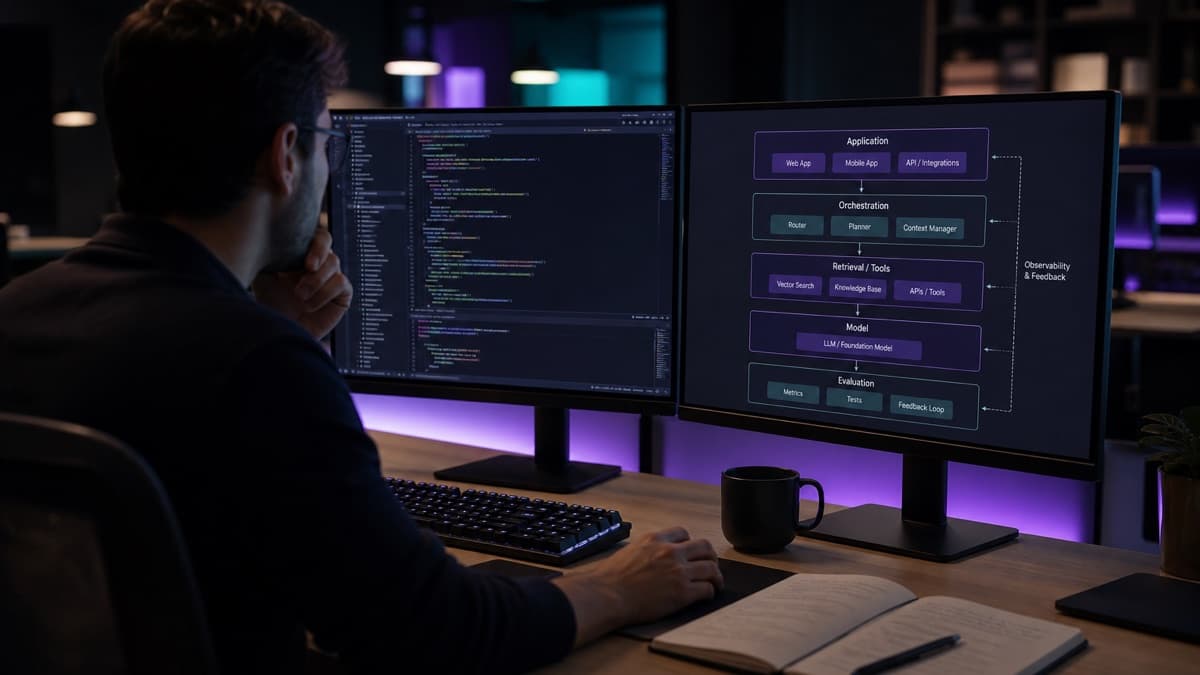
You do not need to restart your career to become an AI engineer. If you already ship production software, you have the hard part. AI engineering in 2026 is mostly building reliable systems around models, not training new ones from scratch.
This is a practical roadmap: what to learn, what to build, and what to skip.
What is AI engineering for software developers?
AI engineering means designing, building, and operating applications that use AI models in production.
You are not trying to become a research scientist. You are extending software engineering into systems where one component is probabilistic.
A traditional app:
User → API → Business logic → Database → Response
An AI application:
User → App → Orchestration → Model + Retrieval + Tools → Evaluation → Response
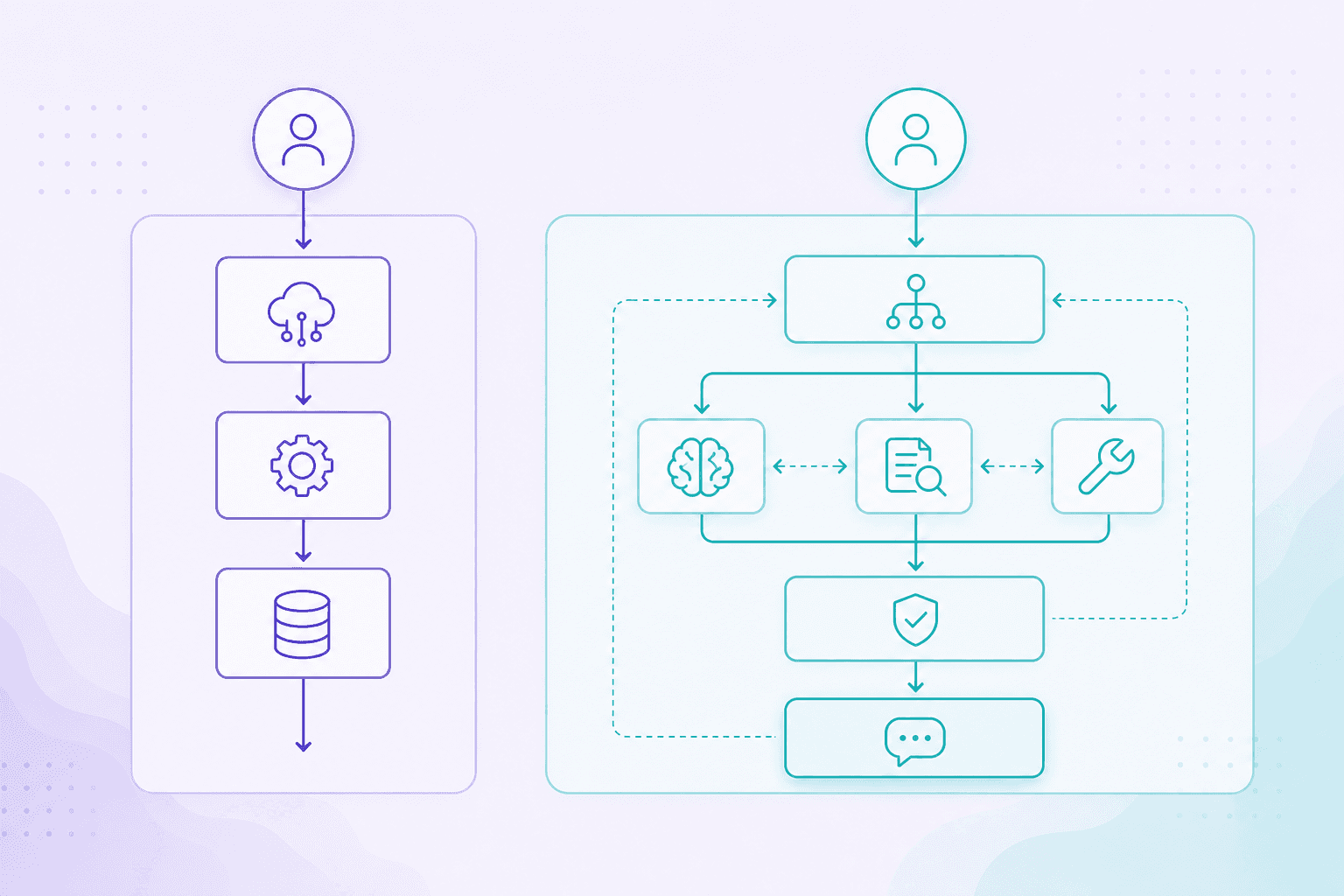
APIs, auth, testing, deployment, and monitoring still matter. Owain Lewis puts it well: the LLM slice is maybe 20% of the job. The other 80% is engineering.
AI engineer vs ML engineer: which path are you on?
This distinction saves months of wrong study.
| Role | Focus | Typical work |
|---|---|---|
| ML engineer | Inside the model | Training, fine-tuning, feature pipelines, model optimization |
| AI engineer | Around the model | LLM apps, RAG, agents, evals, production reliability |
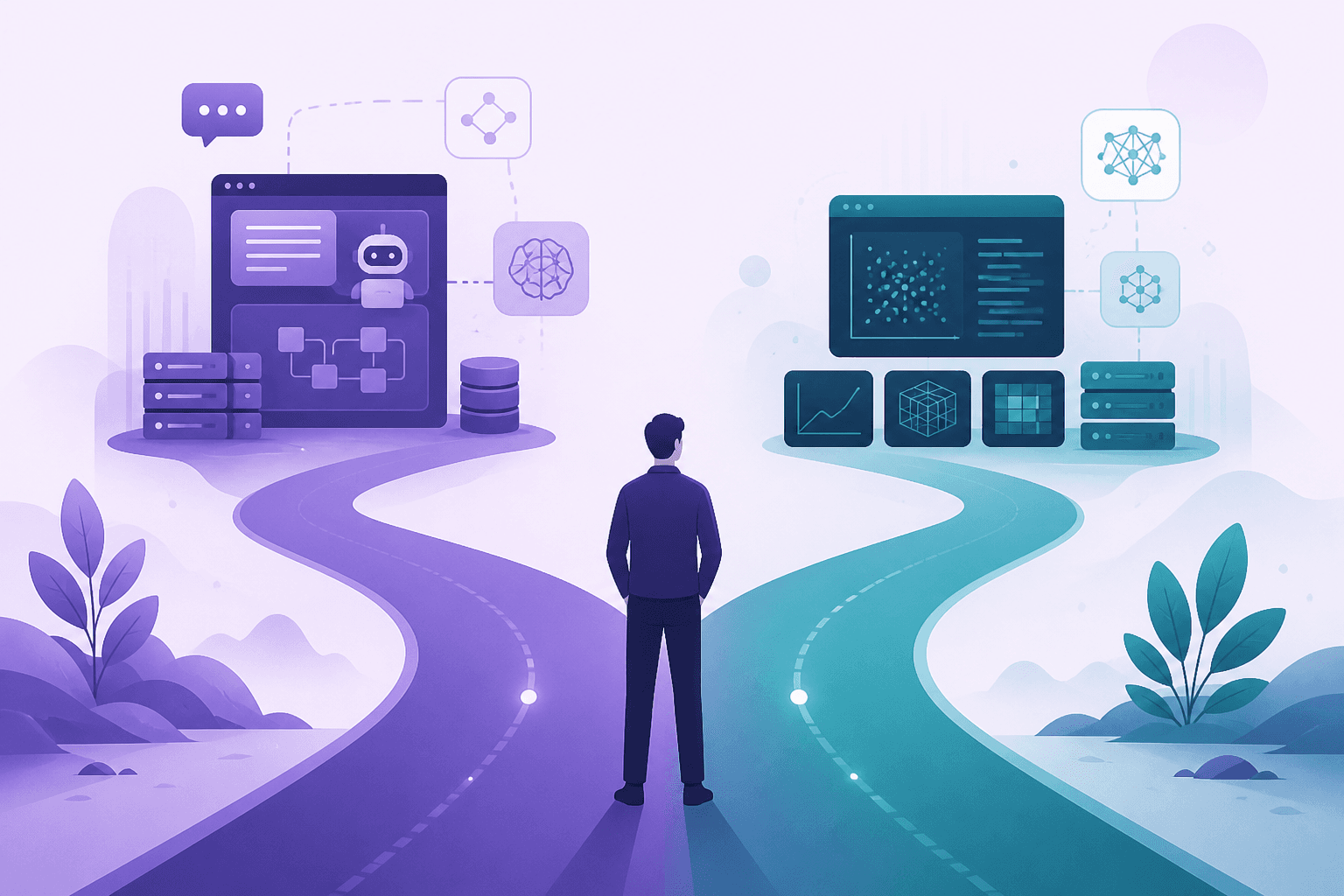
Most product teams hiring in 2026 need AI engineers. They need someone who can ship a RAG pipeline, an agent workflow, and an eval suite. Not someone who trains a foundation model.
Ayautomate's 2026 breakdown matches what I see: strong full-stack engineers can become productive AI engineers in months by shipping features and building eval discipline.
You need ML depth if you will train custom models, own classical ML problems at scale, or go into research. For most SWE transitions, you need systems engineering on top of existing models.
aiarch.dev states the narrow claim cleanly: you do not need PyTorch-from-scratch depth to build excellent things with foundation models.
Why software engineers are already ahead
Production experience transfers directly.
You already know how to:
- design APIs and data flows
- debug distributed failures
- write tests and review code
- ship features under constraints
- think about security, cost, and scale
AI adds a new failure mode: confident wrong answers.
Models hallucinate. Retrieval returns junk context. Agents pick the wrong tool. Prompt changes cause silent regressions.
Your job is to engineer around that uncertainty. That is the same muscle as production SWE, applied to probabilistic components.
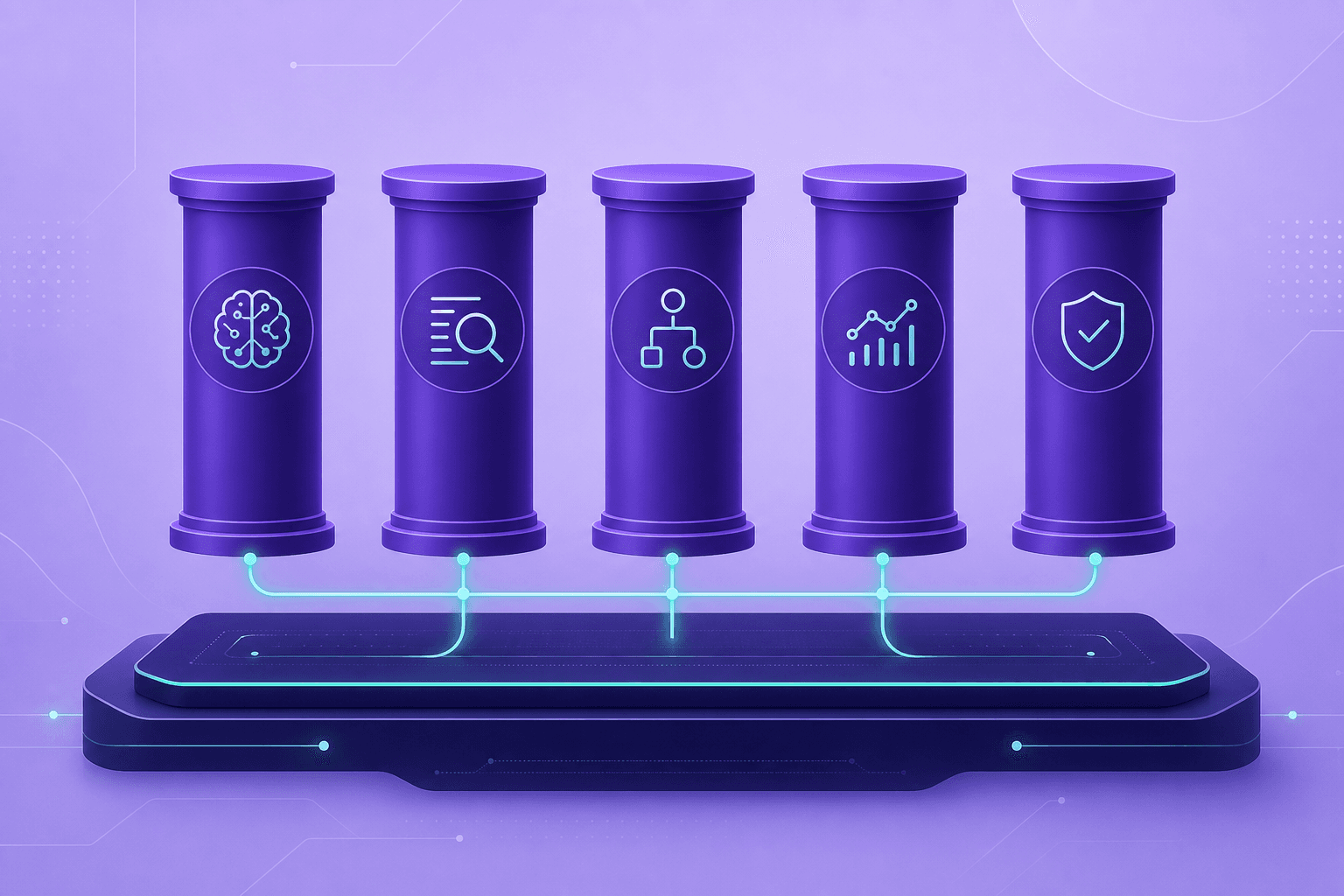
What skills do you actually need in 2026?
Skip the year of passive courses. Learn five buckets in order.
1. LLM API fluency
Pick one provider deeply (OpenAI, Anthropic, or Google). Learn:
- authentication and rate limits
- streaming responses
- token limits and cost
- structured outputs
- retry and fallback patterns
Treat the model like an unreliable external service. You already know how to wrap those.
2. RAG and retrieval
Learn chunking, embeddings, vector search, and hybrid retrieval. Build a pipeline that:
- ingests documents
- retrieves relevant context
- generates grounded answers
- cites sources
- says "I don't know" when context is missing
Measure retrieval quality. Do not trust vibes.
3. Agents and tool use
Learn the agent loop: plan, call tools, read results, retry. See what is agentic coding for the loop itself.
Add boundaries: permissions, scoped tools, human review before merge. See agentic engineering for the discipline around it.
4. Evaluation and observability
Build eval sets. Track regressions when prompts or models change. Log traces, latency, token cost, and failure modes.
Without evals, you are guessing in production.
5. Cost, latency, and reliability
Cache where safe. Route cheap models for easy steps. Set timeouts. Design fallbacks. Monitor spend.
This is SWE work with a token meter attached.
How much machine learning do you need?
Less than the old roadmaps suggest.
You do not need a PhD or a year of calculus-first study to start.
You do need conceptual fluency:
- embeddings and similarity
- precision/recall for retrieval evals
- context windows and tokenization
- temperature and when outputs vary
- why models hallucinate
Aman Kharwal's framing is practical: learn enough to debug systems, not enough to invent architectures.
Optional depth later: classical ML, neural nets, fine-tuning (LoRA). Useful for some roles. Not the first gate.
Do not spend a year only studying
The biggest mistake: course → course → course with nothing shipped.
Better loop:
Learn a concept
     ↓
Build a small project
     ↓
Break it in production-like conditions
     ↓
Add evals and fix failures
     ↓
Write up what you learned
     ↓
Repeat
Learn embeddings → build semantic search. Learn RAG → ship a doc Q&A app. Learn agents → automate one real workflow and log where it fails.
Breakage teaches faster than lectures.
Portfolio projects that prove AI engineering
Another chatbot is not enough. Ship projects that show system thinking.
Production-style RAG system
Ingest docs, retrieve, answer with citations, measure retrieval hit rate, compare chunk sizes and embedding models, document failures.
Tool-using agent
Multi-step agent with search, database, or API tools. Handle retries, permissions, and human handoff when stuck.
Eval-driven feature
Any LLM feature with a test set, regression checks, and before/after metrics when you change prompts or models.
Link case studies from your Projects page. Hiring managers want shipped artifacts, not certificates.
Do not become a prompt engineer only
Prompting matters. It is not the whole job.
Models, APIs, and frameworks change fast. Durable skills:
- system design around probabilistic components
- retrieval and context management
- evaluation discipline
- production operations
The stack:
Application
     ↓
Orchestration
     ↓
Retrieval / Tools
     ↓
Model
     ↓
Evaluation
     ↓
Observability
Prompts live inside orchestration. They are not the architecture.
A 6-month transition roadmap
Assumes ~10–15 hours per week alongside a day job. Adjust pace as needed.
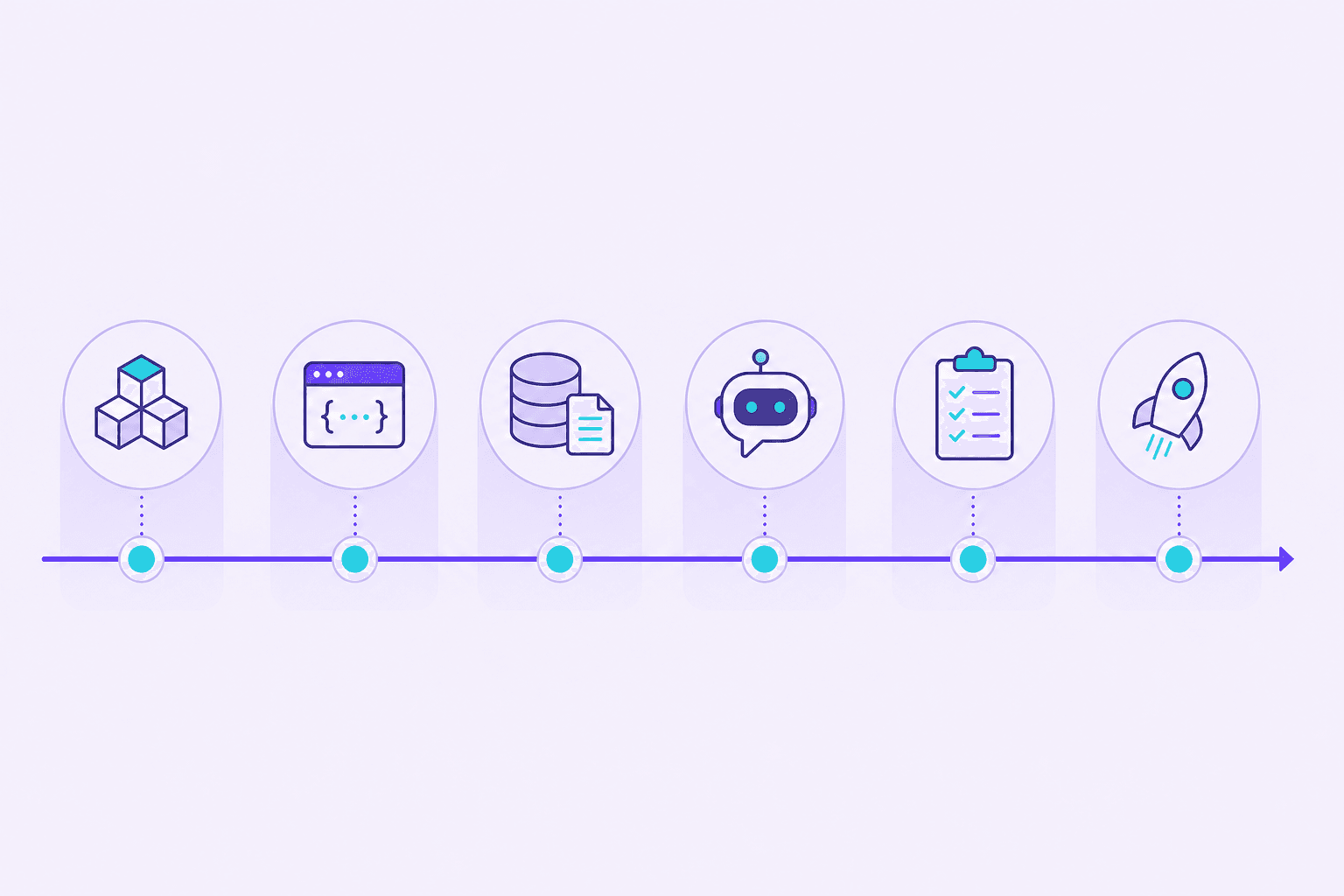
| Month | Focus | Ship this |
|---|---|---|
| 1 | Python refresh, LLM APIs, structured outputs | CLI or API wrapper with retries and logging |
| 2 | Embeddings and semantic search | Search over your own docs or repo |
| 3 | RAG pipeline end to end | Grounded Q&A with citations and basic evals |
| 4 | Tool calling and agents | Agent that completes one multi-step real task |
| 5 | Observability, eval suites, cost control | Instrumented app with regression tests |
| 6 | Capstone | One production-grade project as a public case study |
Do not skip eval month. It is what separates AI engineers from demo builders.
Your existing experience still counts
You are not starting over.
Software Engineer → Start Over → AI Engineer is the wrong story.
The right story:
Software Engineering + LLM Systems + Evaluation → AI Engineering
Combine that with product thinking and review judgment. That trio is what teams struggle to hire.
Where to go next
- What Is Agentic Coding? — the agent loop and supervision
- Vibe Coding vs Agentic Engineering — speed with architectural control
- Building Software Is Not the Same as Solving a Problem — product thinking alongside technical depth
- Code Review Is Becoming a Taste Problem — judgment when agents write the diffs
Models will keep changing. Frameworks will churn. Engineers who understand how software works and how intelligent systems fail will stay valuable.
The best time to start building that intersection is now.
Tags
- AI Engineering
- Career Transition
- Software Engineering
- RAG
- AI Agents
- Production AI
- LLM Engineering
- Agentic Coding
Keep reading
Related articles
What Is Agentic Coding? A Practitioner's Guide to AI Coding Agents
Agentic coding is when an AI agent plans, edits files, runs tests, and retries in a loop while you supervise instead of typing. Here is how the agent loop works, when to use it, and how to stay in control.
- Agentic Coding
- Coding Agents
- AI-Assisted Development
- Cursor
Vibe Coding vs Agentic Engineering: How AI Is Changing Software Development
Vibe coding vs agentic engineering is the difference between accepting AI output on faith and keeping engineer-led control while agents do the typing. I ship production apps solo with an agentic workflow. This is how to move fast without losing the plot.
- Vibe Coding
- Agentic Engineering
- Agentic Coding
- AI-Assisted Development
Building Software Is Not the Same as Solving a Problem
AI made building software faster. It did not make problem-solving cheaper. Implementation is a tactic; product thinking, distribution, and maintenance decide whether anyone actually uses what you ship.
- Product Thinking
- Product-Minded Engineer
- AI-Assisted Development
- Software Engineering